
Odocoileus lucasi, the American mountain deer, previously known as Navahoceros fricki.It is the biggest member of the genus Odocoileus containing whitetail deer, mule deer, black-tailed deer and Yucatan brown brocket.It was most common in the North American Rocky Mountains during the Pleistocene.by Benjamin Langlois
I have known of this deer for years but very little is known about it. I mentioned it, or a paper on it, to Val Geist years ago. He seemed surprised but I can’t remember the context. It would be unlikely he didn’t know of it.
Seeing this recent detail and a possible picture of it tweaked my interest in it again. This puppy could weigh up to 600 lbs. What a bruiser for a whitetail\muley analog. So very little is known about it that I wonder what its antlers were like. Antler size is related to skeleton size so what shape and maximum size did they reach? Who knows they could have been spectacular. Living in the Pleistocene, it also likely would have had higher nutrition to produce a huge rack. Did it look like a whitetail or a muley? We may never know but I will bet it was a sight. Maximum antler size is probably never represented in the fossil record. The stats are against it. The average mature whitetail carries a 130 inch class 8 pt rack. That means half of them are less than that. On the top end another 100 inches is possible which is a great deal. Large northern whitetails can weigh 300 lbs, or half of lucasi.
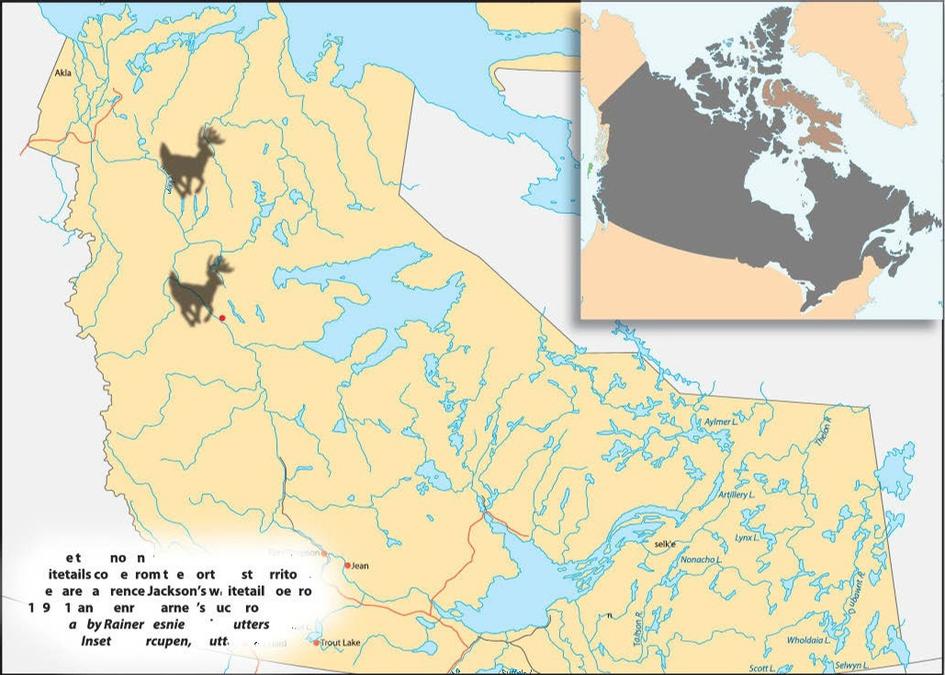
Also, news of note on whitetails is an update in the current North American Whitetail magazine about whitetails above the Arctic circle along the Mackenzie river. I have seen info on it before but the update is a good refresher. I would post the article but it is copyrighted no doubt. A preview of it is here.
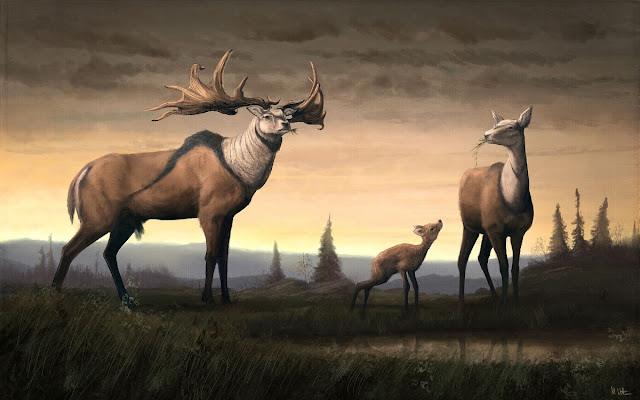
Megaloceros giganteus: behind the antlers
Back to extinct deer. This is an great summary on the current knowledge of the giant deer aka Irish elk aka Shelk. There was lots of new info I was unaware of.
I saw a Shelk rack in a Vermont museum once. It was impressive to say the least. The racks were frequently embellished but there was no doubt this was an outstanding beast. Send me to the Pleistocene.
I haven’t looked at it before but Mark Witton’s source blog looks excellent.
Updated Mar 31, 2023
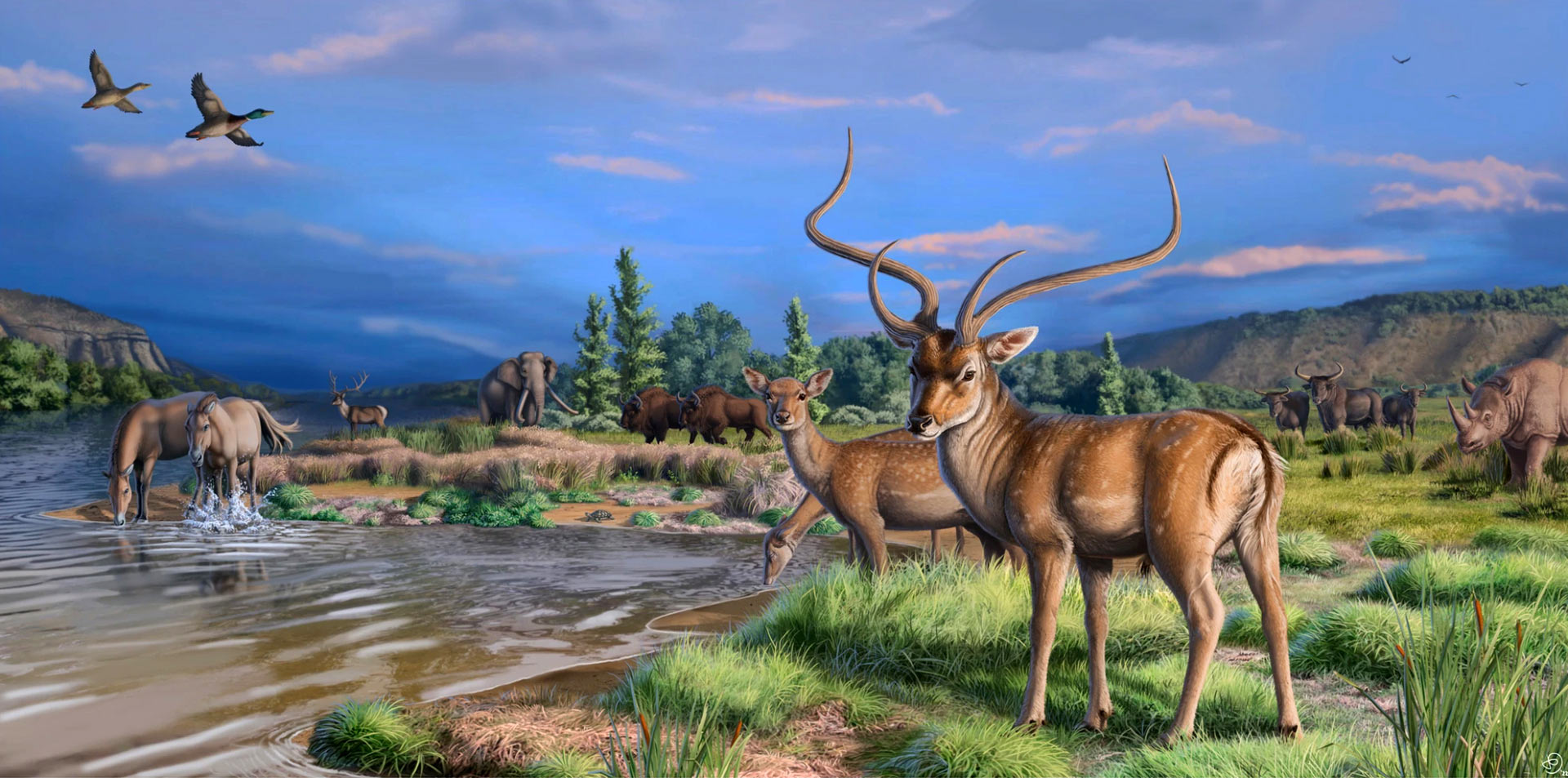

Fallow Deer with Two-Pointed Antlers Lived alongside Neanderthals
A lyre antlered deer. That is a new one on me. Given all the similar shaped headgear in antelopes there may be convergent evolution at play.
White-tailed deer blood shown to kill bacteria that causes Lyme disease
Some unexpected good news. Another angle on fighting Lyme.
Dr. Blossey has long contended that deer abundance and non-native earthworms are the drivers of garlic mustard infestation. Garlic mustard only establishes after earthworms have invaded a site for some years, he says, and although how deer spread earthworms is not yet known, they apparently do, as exclusion plots show.
News to me.