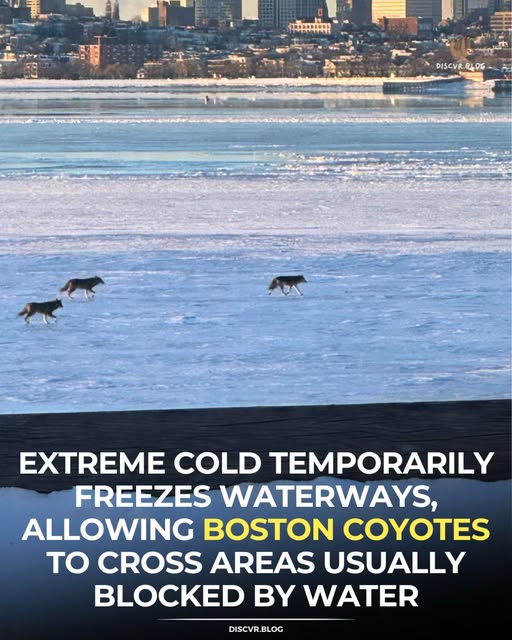
It sounds exaggerated at first.But extreme cold can briefly change the rules of an entire city.
Coyotes are already a permanent part of Boston’s urban ecosystem. They swim rivers, follow green corridors, and move mostly at night. When severe cold hits, shallow waterways, marsh edges, and sheltered coves can partially freeze, turning water from a barrier into a bridge.This does not mean Boston Harbor freezes solid. It means localized ice reduces risk and energy costs for animals that already know how to cross. Coyotes often travel in family groups, especially in late winter when food is scarce and breeding season approaches.Cold snaps also reduce human activity. Less boat traffic and fewer people along shorelines create quieter windows for movement. What feels sudden is usually behavior that was already happening, just hidden.These moments matter because they show how climate extremes reshape urban ecology in real time. Cities aren’t separate from nature. They are ecosystems that respond quickly when weather shifts the balance.
Source – Massachusetts Division of Fisheries & Wildlife: Coyote ecology and urban behaviorPhoto/x: onlyinbos
I talked to a guy that ran hounds on coyotes here and he said the dogs would chase the the coyotes 10 miles across the ice from the island to the mainland sometimes.
We have these guys all over Brookline ma we don’t see them often but they are out there at night in wooded areas .. the foxes fill in heavily populated areas….but I have seen the big guys here and there late at night