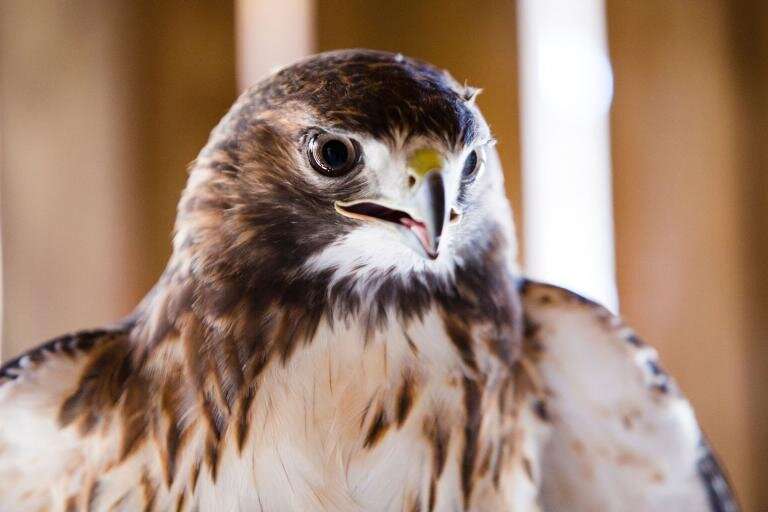
In 2020, Tufts Wildlife Clinic Director Maureen Murray, V03, published a study that showed 100% of red-tailed hawks tested at the clinic were positive for exposure to anticoagulant rodenticides (ARs). Such exposure occurs when these chemicals are used to kill mice or rats, which eat the poison, and the birds eat the poisoned prey.
New study is first to find exposure to neurotoxic rodenticide bromethalin in birds of prey
From 2003: Pale Male, NYC’s favorite hawk
Pale Male, red-tailed hawk who nested above NYC’s Fifth Avenue for 30 years, dies at 33 May 2023