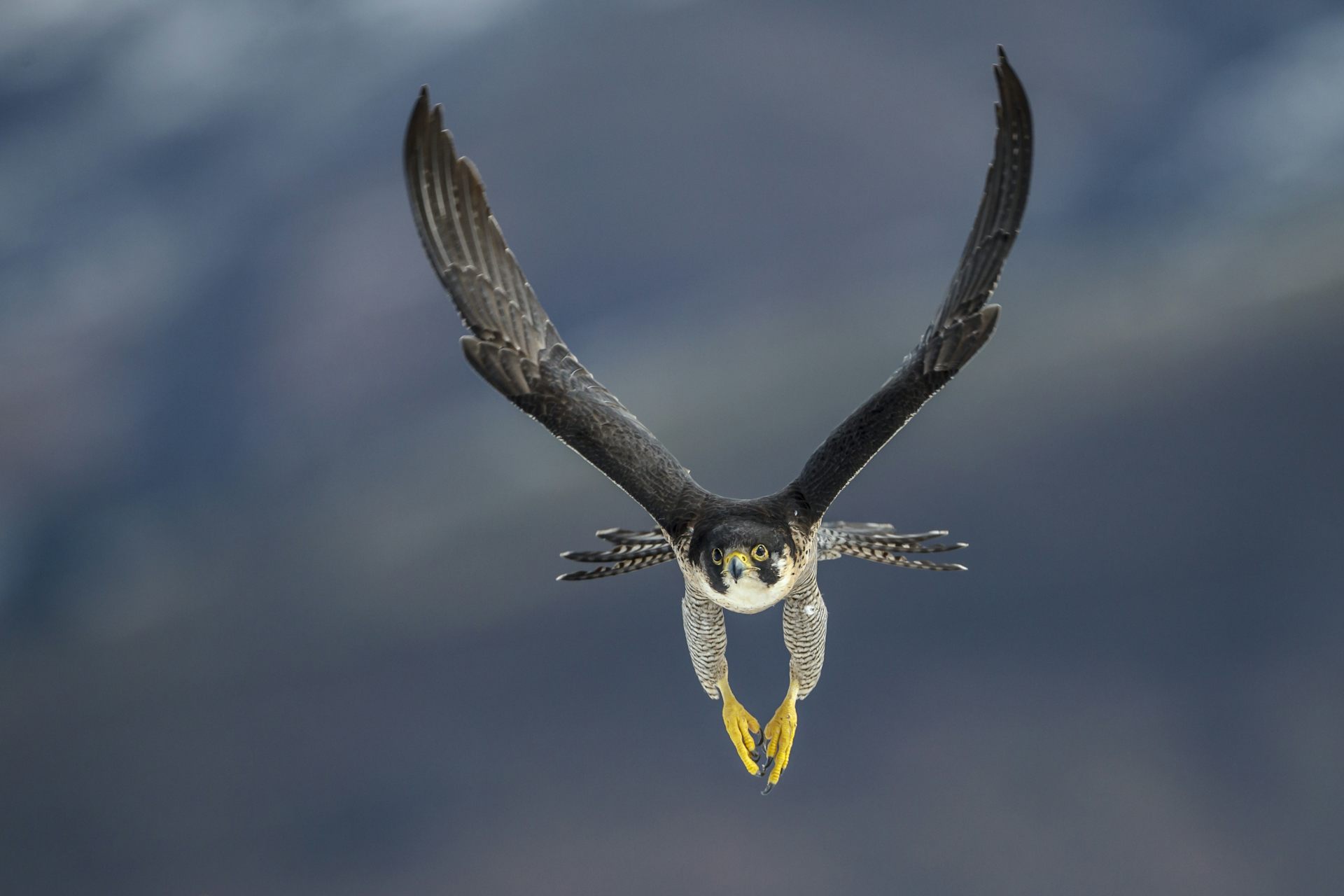
Inspired by these findings, we set out to explore whether the same pattern applied to other falcon species. We used over 10,000 images of 39 falcon species collected from citizen science platforms, including the Macaulay Library. Surprisingly, this larger study challenged our earlier assumptions.
We again linked the solar radiation levels experienced by the falcons in different locations to the size and darkness of their malar stripes. Contrary to what we observed in peregrines, for these other species the size of their malar stripe was unrelated to the level of sunlight exposure. In our new analysis, peregrines still showed a clear connection between brighter environments and darker stripes. But this was not the case for their relatives. We also didn’t find an overall pattern of species living in sunnier regions like Africa having larger and darker malar stripes. In fact, some African species, like the Dickinson’s kestrel, had no malar stripes at all.
Why do falcons have stripes under their eyes? The answer is more complex than we thought