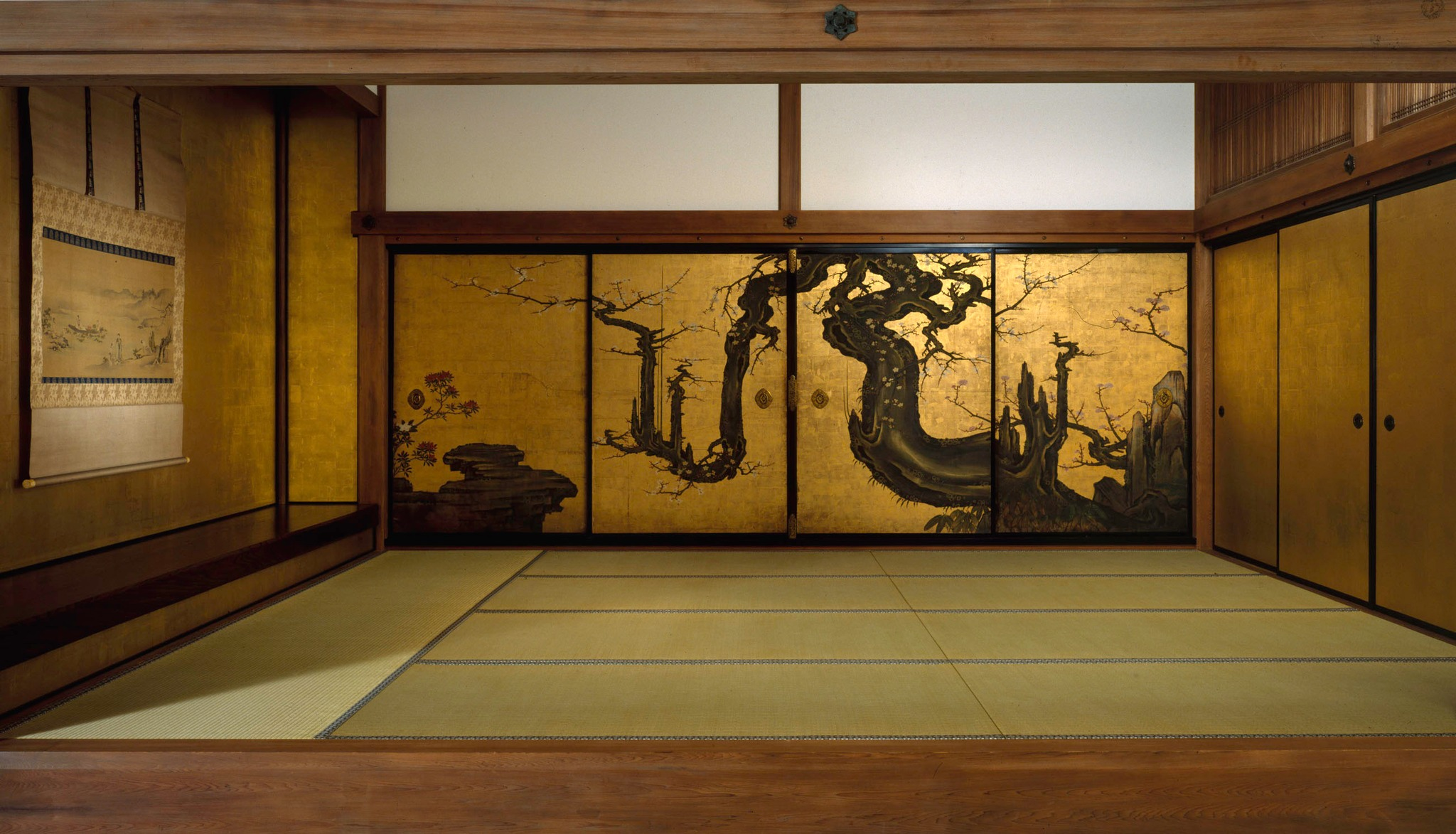
This striking mid-17th century sliding-door painting, “Old Plum” (1646), is considered the iconic masterpiece and the crown jewel of the Kano paintings within the Harry G.C. Packard Collection of Asian Art at The Metropolitan Museum of Art @metmuseum. A bold composition of a plum tree extends across a 485.5 cm expanse of radiant gold leaf on paper.Originally created by Kano Sansetsu, these panels were commissioned for Tenshō’in, a subtemple of the great Zen Buddhist monastery Myōshinji in Kyoto. In East Asian culture, the plum blossom—the first tree to bloom despite the bitter wintry cold—is a powerful symbol of resilience against a harsh political climate.
The artwork exemplifies how Japanese artists transformed age-old continental pictorial themes through abstraction and stylisation into a monument of nature painting. The painting was eventually acquired by the American collector Harry Packard, whose connoisseurship was instrumental in assembling the collection before it was sold to The Met in 1975.
For more insight into the Harry G.C. Packard Collection of Asian Art, read the full article, ‘Harry Packard’s Eye for Japanese Painting: His Collection Sold to The Met in 1975’ by John T. Carpenter, in the Spring 2026 issue of Arts of Asia.
Pictured: Kano Sansetsu (1590–1651), Old Plum, 1646, four sliding-door panels (fusuma), ink, colour, gold and gold leaf on paper, each 174.6 x 121.3 cm (overall 174.6 x 485.5 cm). The Metropolitan Museum of Art, New York, The Harry G.C. Packard Collection of Asian Art, 1975.268.48a–d.
Steve has an affinity for Japanese art as do I.
I sent pix of hawk portraits done by Japanese masters from the Museum of Fine Arts, Boston once.