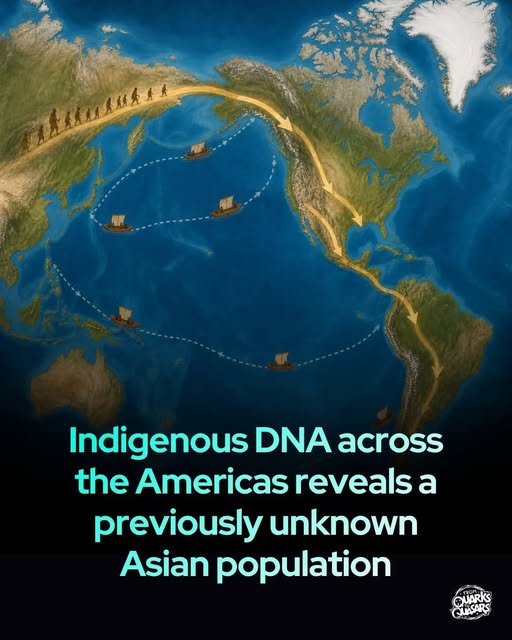
It’s so bizarre as to how a piece of history gets marginalized and then forgotten. To early European explorers in North America it was a known fact that the Chinese had colonized the Pacific North Coast all the way to northern California.
The Chinese called this territory Fushang and it was well supplied for quite sometime until it was abandoned by the empire centuries before the Spaniards arrived. Yes their people completely abandoned…what might we think happened? This part of history is well studied in China.I used to share with my colleagues when they became all excited about Chinese trade missions and investments, I would say, “You do realize that they think that this land is there’s right?” They were always confused by this because the historical record of it had been erased here.One colonizer making a deal with another colonizer.But now here’s a study. Indigenous American DNA reveals a previously unknown Asian population.Researchers analyzing DNA from nearly 200 Indigenous individuals across North and South America uncovered something unexpected: traces of a previously unknown “ghost” population that contributed to modern ancestry.The team sequenced genomes from diverse groups, including Andean communities like the Quechua, looking for patterns that standard models couldn’t explain. What they found was a genetic signal that didn’t match any known ancient population.The best explanation is a previously undocumented wave of people that entered South America around 1,300 years ago.This group didn’t replace existing populations. Instead, they mixed with them, leaving behind small but detectable genetic contributions that persist today. Because no direct remains or clear archaeological record have been linked to them yet, scientists call them a “ghost” population, known only through DNA.What makes this discovery important is how it reshapes our understanding of migration into the Americas. For decades, the dominant view focused on a small number of migration waves from Asia into North America, followed by southward movement. But this finding suggests the story is more complex, with later movements and interactions continuing long after the first arrivals.Genetic studies like this are revealing that human history isn’t a simple timeline. It’s a web of migrations, mixing, and lost lineages that don’t always leave obvious traces.
Read the study:
Our histories are way more complicated than we may ever know.