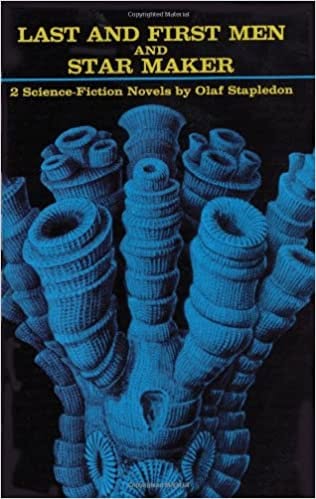
In his 1930 novel “Last and First Men,” Olaf Stapledon imagined humanity’s future across two billion years, following civilizations as they rise and fall and tracing 18 successive forms of humanity through extinction, evolution, and strange rebirth.
Stapledon called the novel “an essay in myth creation.” Rather than focus on individual characters, he considered humanity from an almost unimaginable distance, with “a distant sense of beauty and tragedy.”
His profuse imagination inspired generations of science fiction, from the X-Men and “Dune” to Dyson spheres and the multiverse. Arthur C. Clarke, who discovered the book as a teenager, wrote in 1983 that “No book before or since has had such an impact on my imagination,” adding that it had “changed my whole outlook on the universe” and influenced much of his writing ever since. Borges, too, cited Stapledon as an inspiration for his short story “El jardín de los senderos que se bifurcan,” or “The Garden of Forking Paths.”
“A science fiction author could spend their career turning Stapledon’s speculative paragraphs into novels,” writes Matthew De Abaitua in the introduction to a new abridged edition of the novel, publishing tomorrow. Read an adapted version of De Abaitua’s introduction here:
The Man Who Saw Humanity From Two Billion Years Away