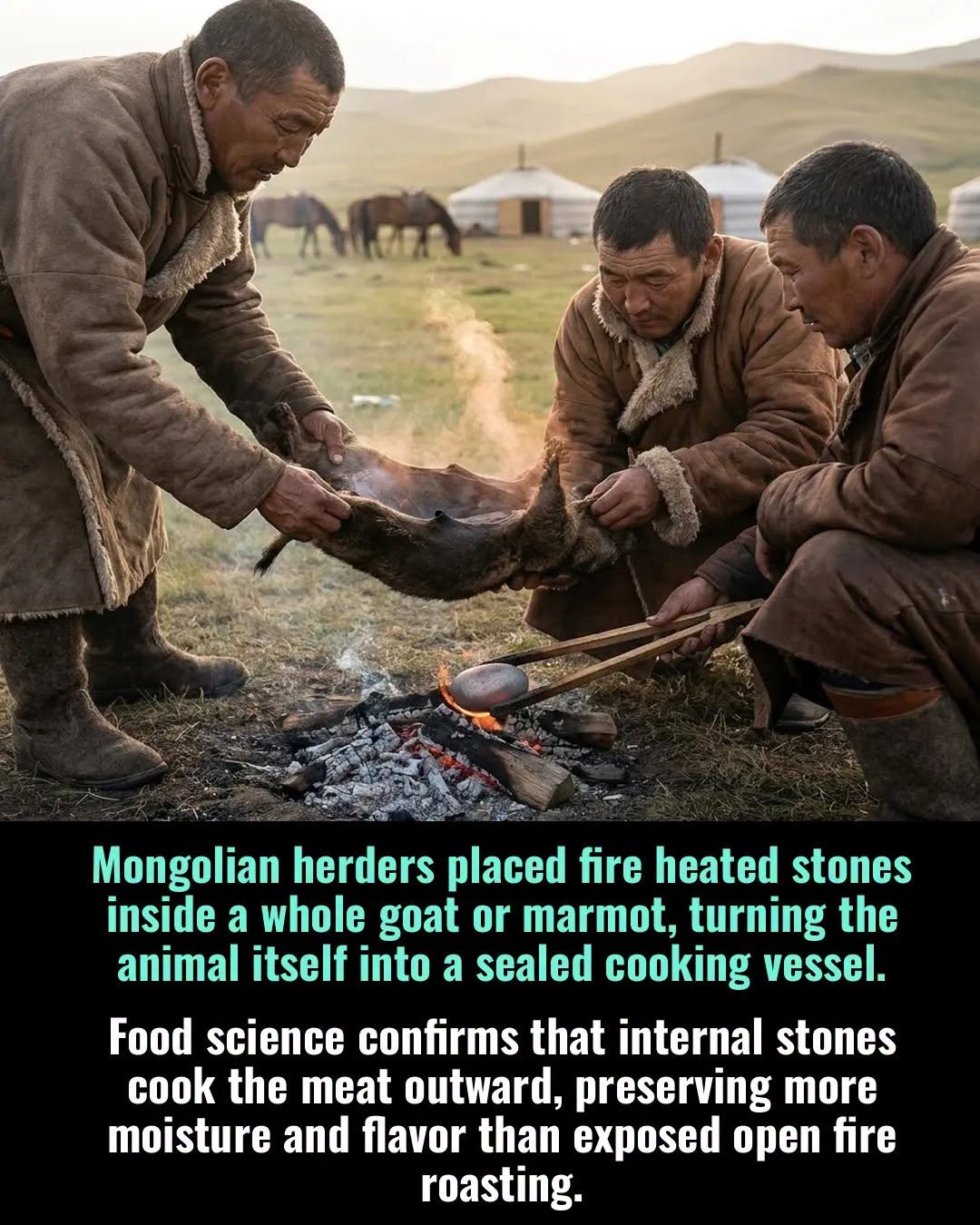
The fire was not placed around the animal. It was placed inside it. Mongolian herders prepared boodog by cleaning a goat or marmot, filling the cavity with stones heated until extremely hot, then sealing the opening.
The animal’s own skin became the cooking container. There was no metal pot, no roasting spit, and no need to keep the meat directly over flames. The method suited herders working across the Mongolian steppe, where practical cooking depended on fire, livestock, and whatever materials were close at hand.
The heated stones radiated warmth from the center of the carcass. As the meat cooked outward, the sealed skin held in steam and natural juices that would normally escape during open fire roasting.
That changed the texture of the meal. Instead of allowing the outside to dry while the interior slowly heated, boodog created a moist, enclosed cooking environment with heat distributed from within.
Food scientists recognize why the technique works. A sealed vessel reduces moisture loss, while centrally placed heat promotes more even cooking than an external flame alone. The stones and the animal’s skin together formed a simple disposable oven.
Boodog was more than an unusual recipe. It was a precise answer to a basic problem faced by ancient cooks everywhere: how to turn tough meat into a nourishing meal without wasting its moisture, flavor, or available fuel.