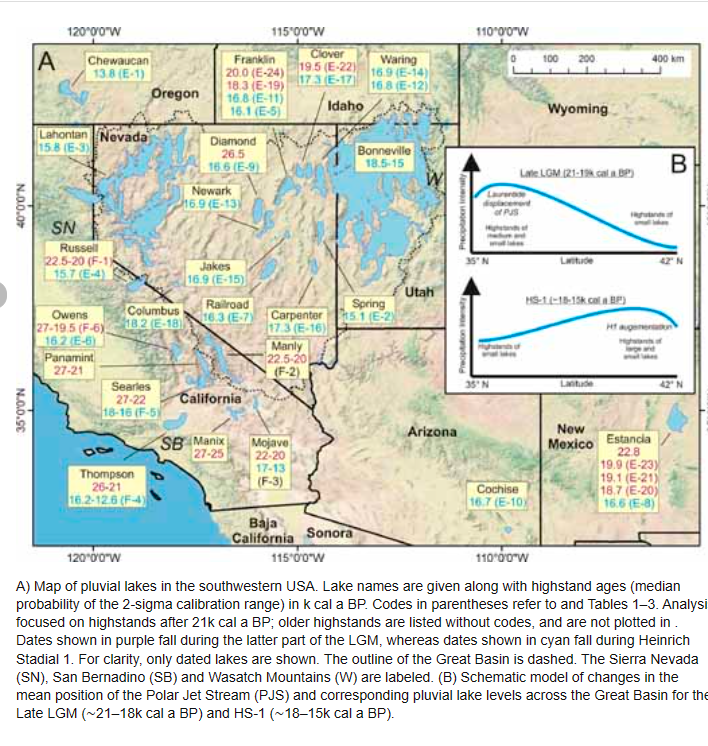
Some think the source was summer rains coming from fronts originating in the tropics, while most believe the polar jet stream carried moisture from the North Pacific that fell as heavy snows during winter. A new study of carbon and oxygen isotope ratios in tooth enamel from Pleistocene mammals supports the latter scenario.
Snowy Winters and Dry Summers Prevailed in Southwestern North America during the Late Pleistocene
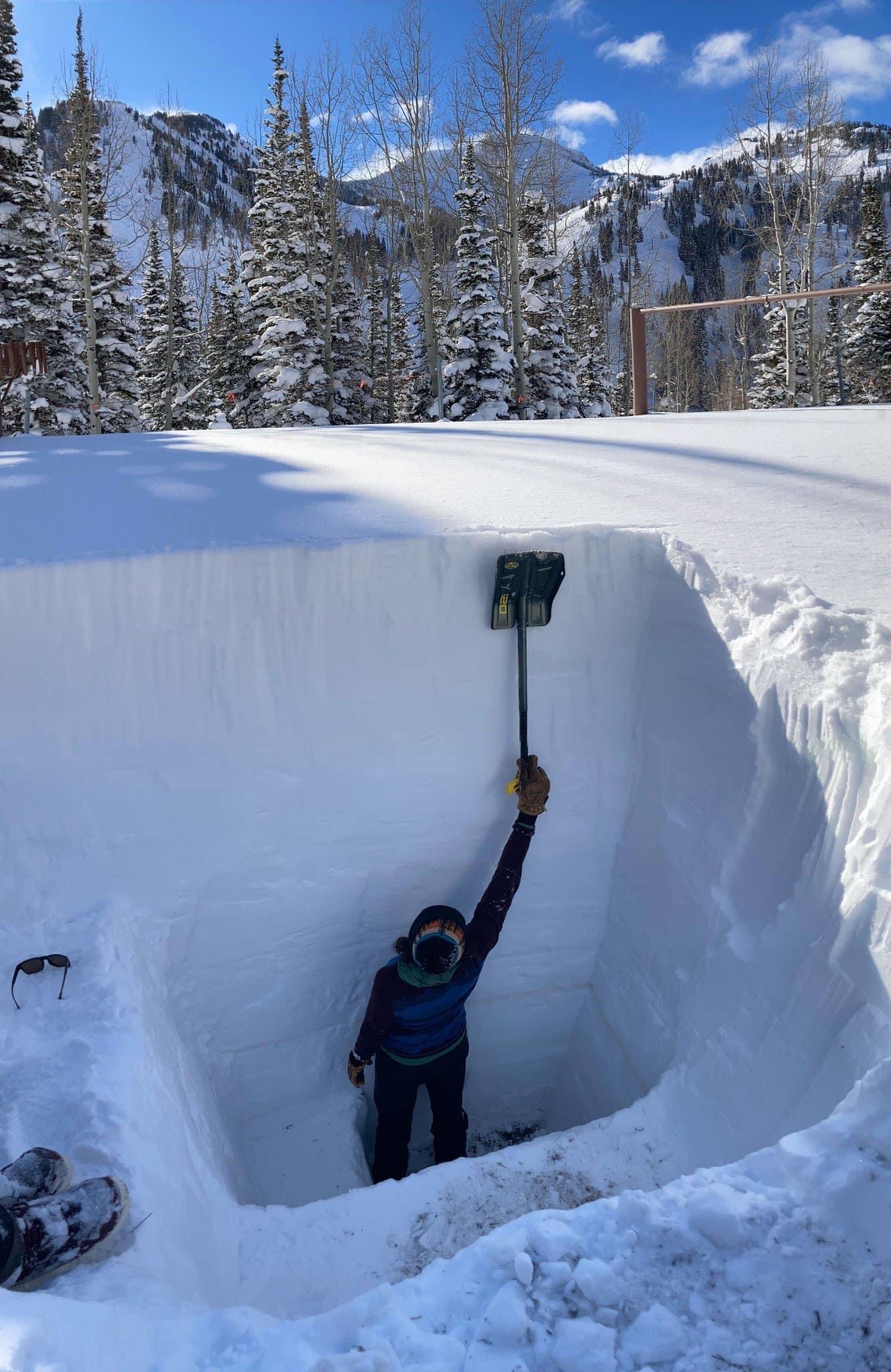
ALTA UTAH!! Season snowfall total to 445 inches (11.3 metres) — officially the deepest start to the season (October through January) in the 43-year history of the Collins study plot.
[Via Chase Thomasen, courtesy: Dr. McKenzie Skiles Miss Snow It All
Perhaps it looked something like Utah this year.
Meanwhile, here it has been the warmest January on record. Some stations report 6 degrees celsius above normal. The norms are below freezing day and night. We are about to get a Labrador dick punch, though, with some models predicting -31 C on the 4th.
As usual, open in new tabs to embiggen.
Tahoe toon
MAMMOTH BREAKS THE RECORD We can officially say this is the snowiest season on record! This has truly been an incredible year with 695″ of snowfall at Main Lodge and 870″ of snowfall up at the summit.