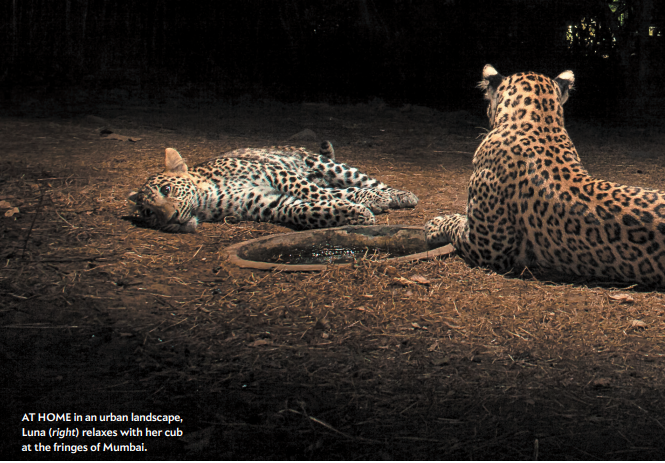
The Scientific American.com April issue has an Edge of the Wild story on urban leopards. I haven’t checked it yet but it may have good info.
To my surprise, leopards in this landscape were eating primarily dogs (39 percent of their diet), and overall, domestic animals made up 87 percent of their prey. Interestingly, dogs supplied almost four times more biomass to the leopards’ diets than goats did even though goats were seven times more numerous in the area. Farmers confirmed that they lost far fewer livestock to predators than to diseases or accidents, which may have made them more accepting of the loss of the occasional goat. Never before had such high densities of large carnivores been reported in a populated landscape in India.
I just read it and was surprised that the leopards are mixed in with people to a high degree but leave them alone. The biggest problem seemed to be translocating leopards outside their home ranges. Conflicts escalated in those cases but it was amazing how little trouble there was otherwise.
There is one innovative, nature-based solution in the paper though that might be of particular interest to the farmers of Gabon: bee fences. These makeshift, homespun barriers are hung with beehives every 10 meters or so. If an animal tries to crash through, the bees quickly give them a reason to turn around. And while popular culture might show elephants cowering when a mouse scuttles by, it’s bees they really don’t like. If the elephants, preoccupied by bees, don’t trample and gobble the crops, the farmers are more likely to help protect the animals.
How do we make farming better for the planet? Ask women
This article makes similar conclusions. Social considerations and involvement are the real tricky part or as they used to say wildlife management is people management.
The bee bit is interesting. I never knew bees scared elephants.