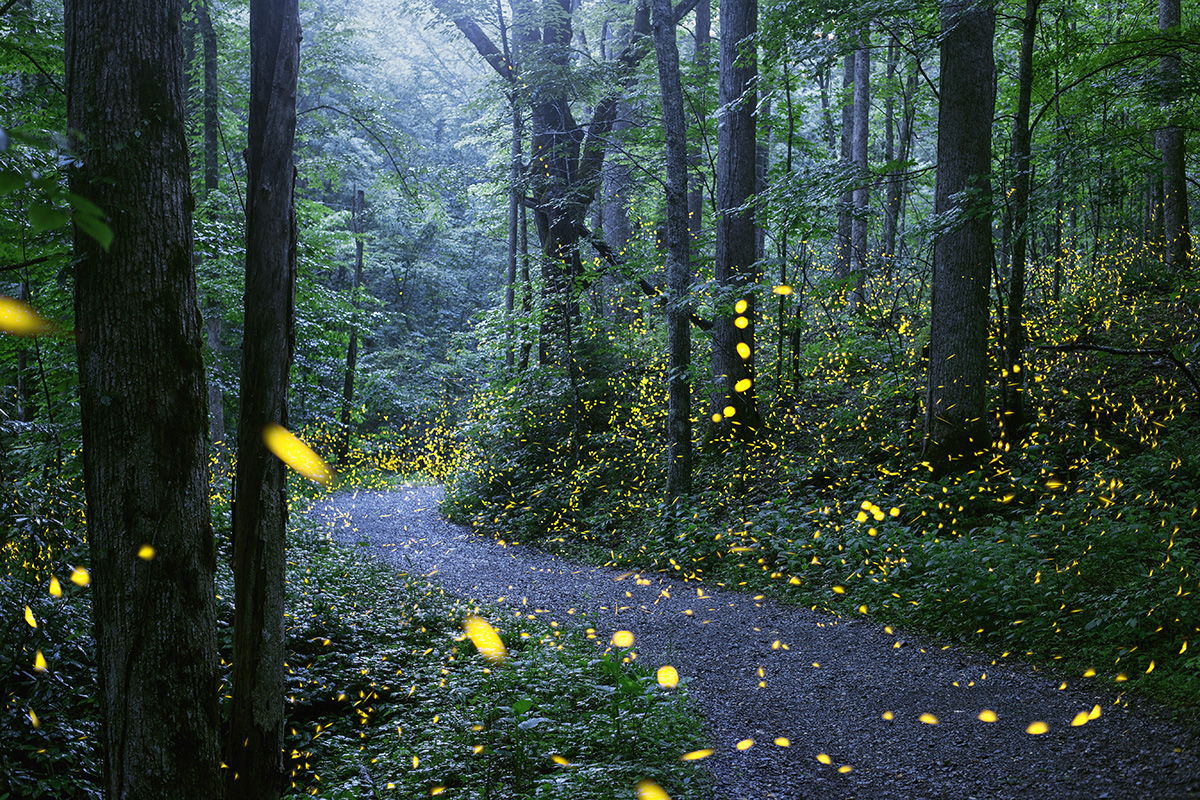
We have fireflies here but I have never seen anything like this.
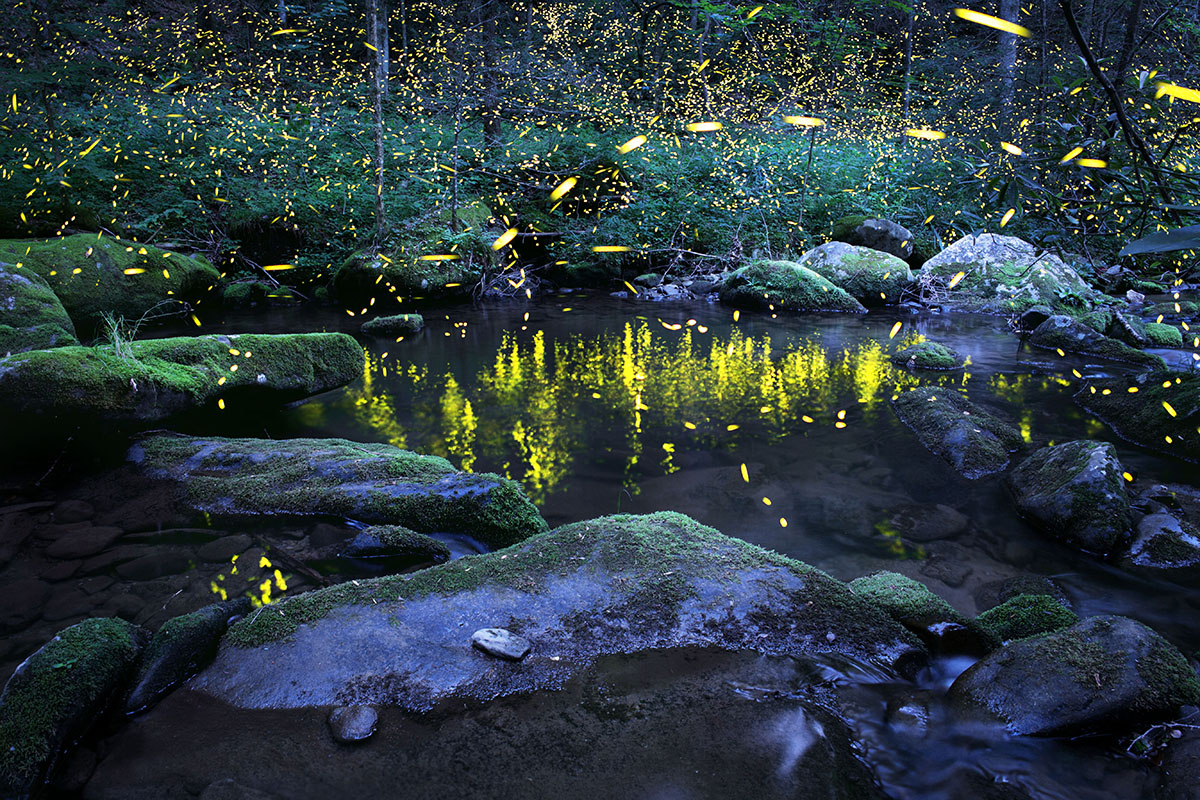
or this.
In a rural town in Mexico’s central Tlaxcala state, where a new synchronizing firefly species was formally recognized in 2012, tourism has since ballooned to some 120,000 visitors a year. And in North America, too, firefly tourism is on the rise. In Faust’s beloved Great Smokies, even after years of trying to throttle crowds—the National Park Service has instituted an online lottery that entitles up to 1,000 visitors a night to take a shuttle to the fireflies—some guests still head off into the forests and lie on the ground.
After Attenborough’s film, things got out hand. A thousand people showed up in 2016. Cars filled the field, and as they pulled out, every pair of headlights beamed into the woods, grinding the synchronous display to a halt. “It was like, this is gonna break us,” Peggy says. “This is going to kill us because it’s going to kill the fireflies.”
With firefly tourism on the rise as well, a team convened by Lewis published a set of recommendations in 2021 for how to manage the upswing of interest. While tourism is unlikely to lead to global extinctions, it can certainly extirpate local populations, she says.
Humans Love Fireflies. Maybe Too Much.
This is a good story. I was clueless about this firefly tourism. After seeing these pix I can see why it is a thing. I am used to only a few at a time. Of course, as the article says people want to love it to death.
The season here is in July.