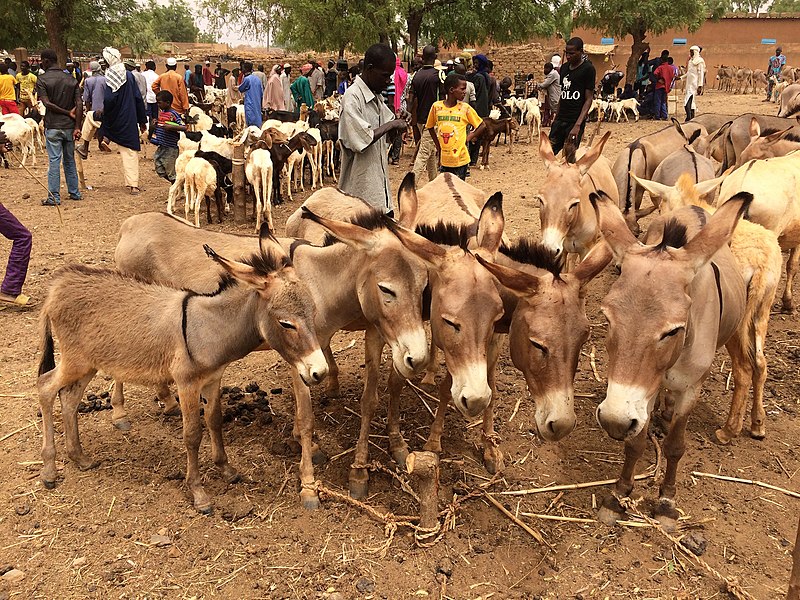
Ejiao was once a luxury consumed at the emperor’s court, valued as a traditional remedy taken to strengthen the blood, improve sleep, and slow aging. Today, ejiao is for the masses. People drink it in a tonic that costs about $2 for 10 vials; eat it in small cakes made with rock sugar, rice wine, walnuts, and black sesame at $7 for a tin of 30; or snack on ejiao-coated dates at just under a dollar a packet.
There’s just one problem: The collagenous substance is extracted from donkey hides.
A popular remedy is made from hides imported from Africa—but the out-of-control trade is causing geopolitical problems for Beijing.
How the Humble Donkey Became a Big Problem for China
I was taken aback. What next? China is a pit for nature.
In some areas domestic donkeys have returned to the wild and established feral populations such as those of the burro of North America and the Asinara donkey of Sardinia, Italy, both of which have protected status.[citation needed] Feral donkeys can also cause problems, notably in environments that have evolved free of any form of equid, such as Hawaii.[78] In Australia, where there may be 5 million feral donkeys,[26] they are regarded as an invasive pest and have a serious impact on the environment. They may compete with livestock and native animals for resources, spread weeds and diseases, foul or damage watering holes and cause erosion.[79]
Maybe the feral populations can be of use. There used to be an eradication program in the southwest US.