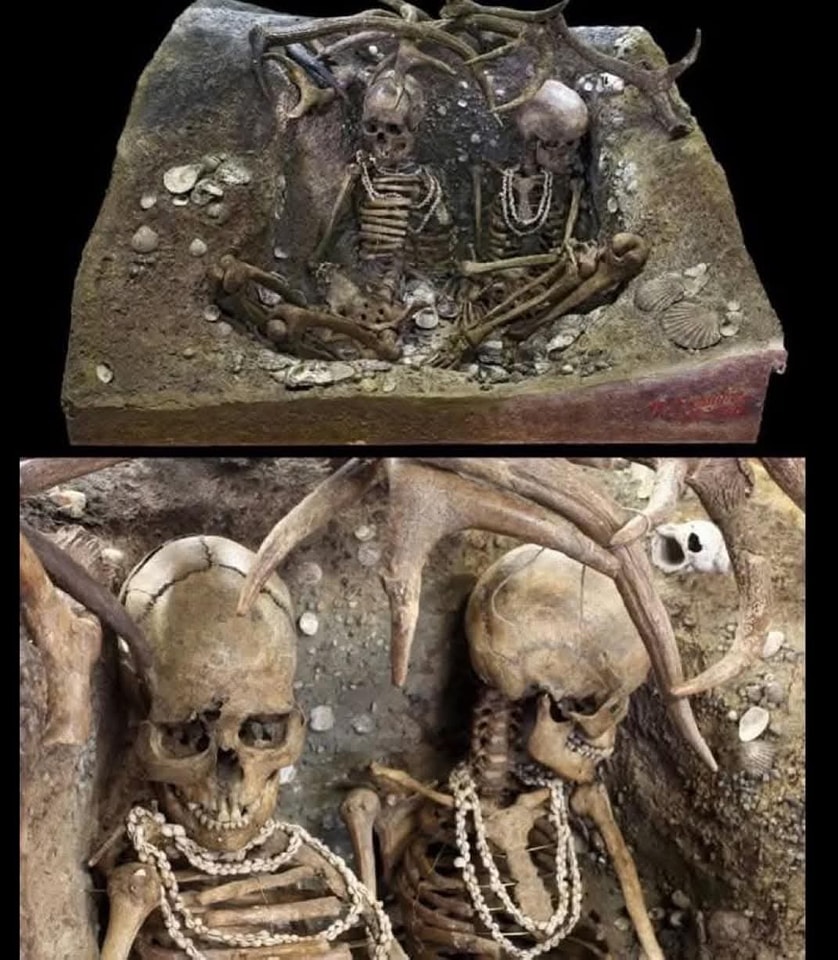
At Téviec in present-day France, archaeologists unearthed a 9,000-year-old grave containing the remains of two women who met a violent end. Their skeletons bore signs of trauma, hinting at a deadly attack or conflict. Yet, their burial was anything but ordinary. The women were carefully laid beneath a structure made of antlers, forming a protective canopy over their bodies. Adorned with shell necklaces, likely hand-strung, they may have been honored for their status or remembered for reasons lost to time.
The grave was so meticulously arranged that researchers excavated it as a single piece to preserve its details. Now displayed at the Muséum de Toulouse, this discovery continues to spark questions about who these women were and why so much care was taken in their burial. Were they victims of war or betrayal? Were they revered figures in their community? The elaborate craftsmanship and symbolic touches suggest deeper meaning, offering a rare glimpse into the rituals—and dangers—of life nearly 9,000 years ago. Archaeology World
Antlers have had totemic power for a long time. Not much has changed in that regard.