The study suggests that some of that genetic legacy, it now appears, was passed on to living people in the Philippines, Papua New Guinea, and across south-east Asia.
Tooth enamel is the hardest tissue in the body, and its proteins survive long after DNA has degraded beyond recovery. What the team found in those proteins is striking. All six specimens share a previously unknown amino acid variant – a tiny molecular signature, a single letter changed in the protein sequence, never seen in any other hominin alive or dead.
This variant clusters these east Asian H. erectus into a distinct group, confirming their identity and settling a long-running debate about whether the unusual Hexian fossils were H. erectus at all. A second variant they share, however, is not unique to H. erectus
Ancient tooth proteins suggest Homo erectus may have left a genetic legacy in people today
Traces of erectus in modern pops?
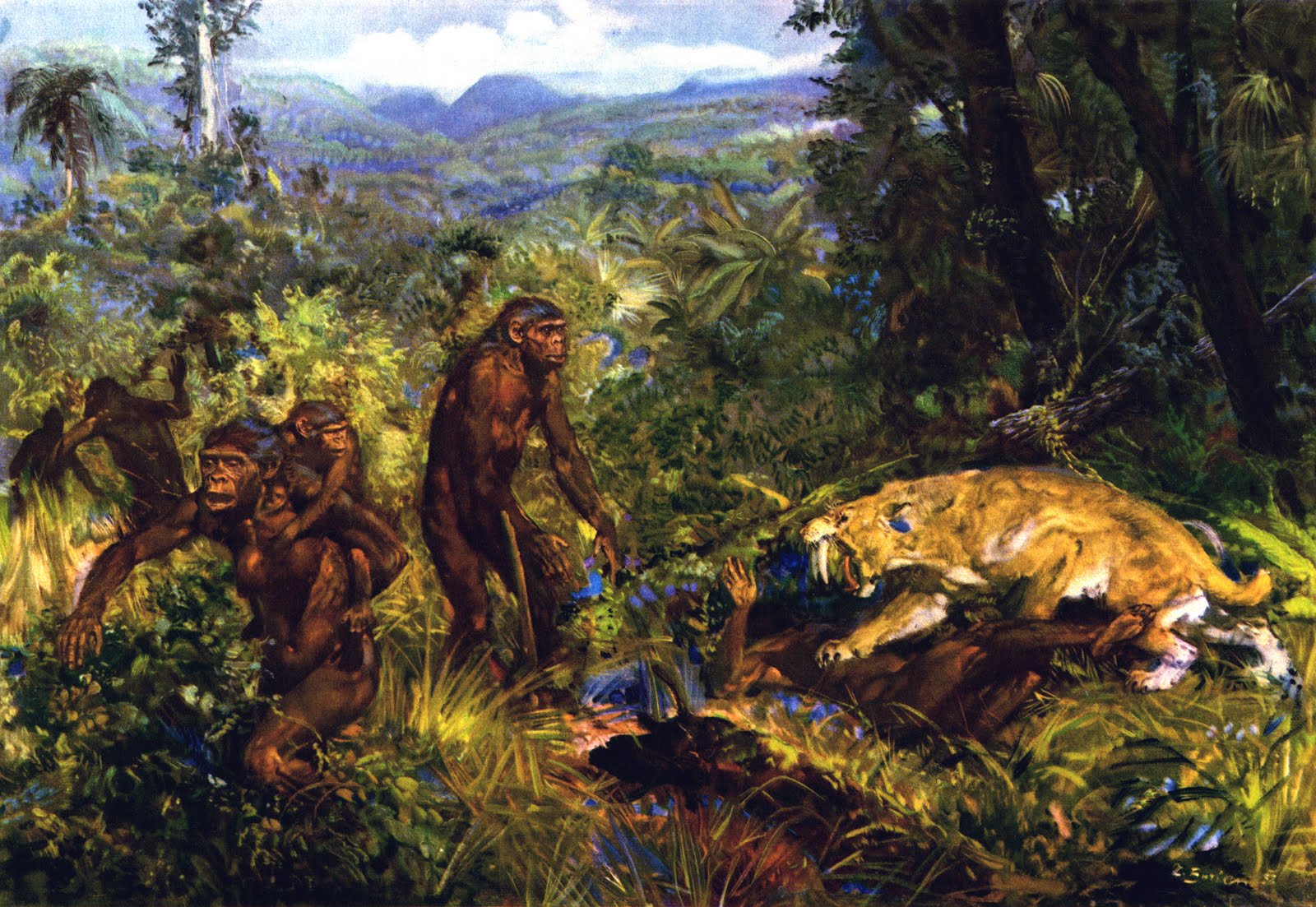
The painting is by Burian in 1952. Not a good day for erectus there.