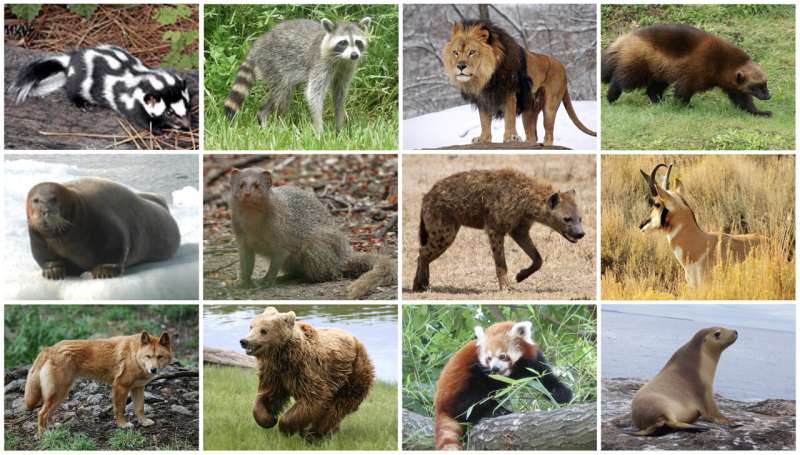
Since the HMS Beagle arrived in the Galapagos with Charles Darwin to meet a fateful family of finches, ecologists have struggled to understand a particularly perplexing question: Why is there a ridiculous abundance of species some places on Earth and a scarcity in others? What factors, exactly, drive animal diversity?
what an animal eats (and how that interacts with climate) shapes Earth’s diversity.
Two key factors emerged as crucial in shaping these patterns: precipitation and plant growth.
But the sweet spot for predators and herbivores fell in a middle zone between the two extremes, he said. Places like Madagascar, where precipitation patterns had an equal split between a wet season and a dry one (six months each), had the ideal ecological cocktail for promoting conditions for these two groups. Omnivore diversity tends to thrive in places with very stable climates.
“It was surprising that this 2nd factor, measured as “gross primary productivity”, was more important for predators than omnivores and herbivores,” Atwood said. “Why this is remains a mystery.”
Research finds global precipitation patterns a driver for animal diversity
Interesting work.
New unified theory shows how past landscapes drove the evolution of Earth’s rich diversity of life