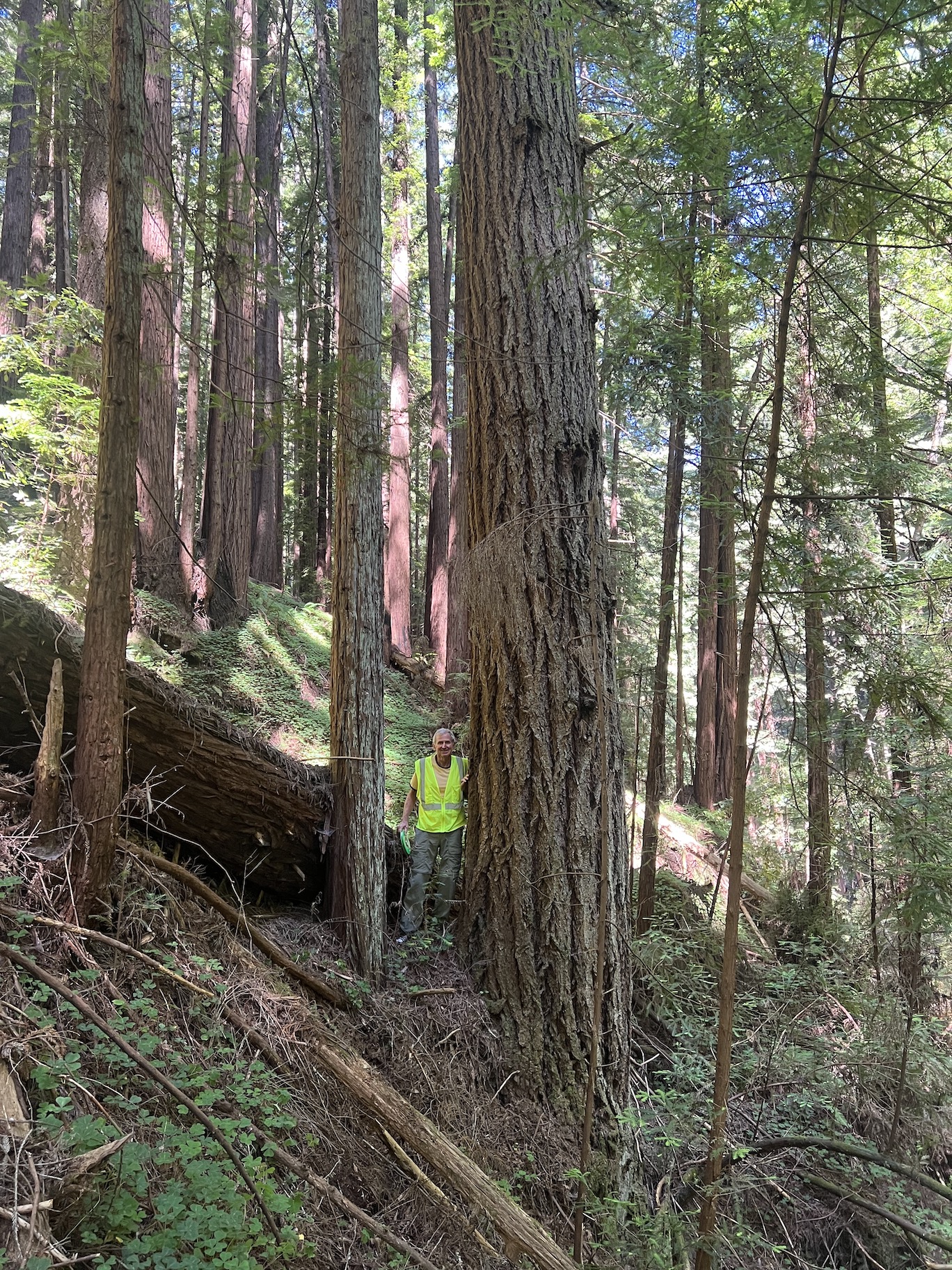
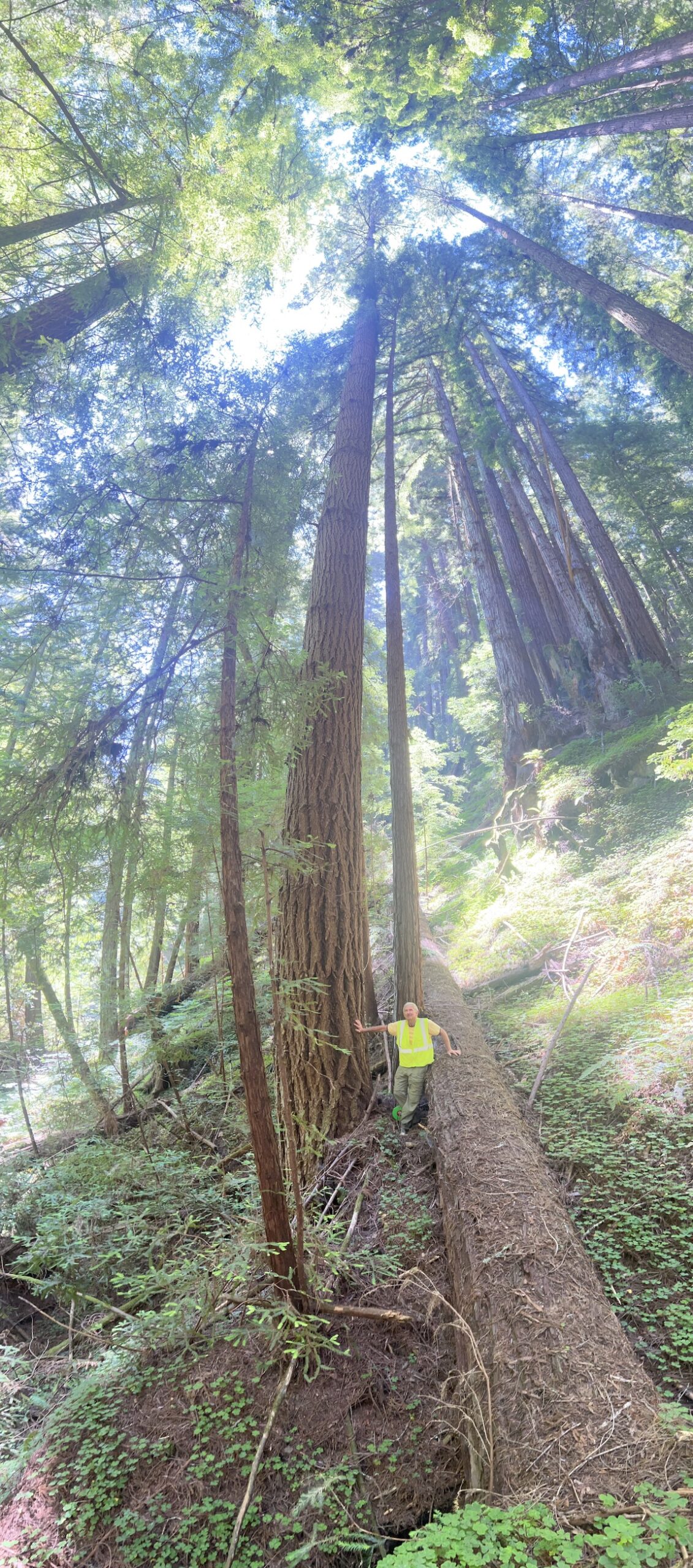
In 2017, I found an ultra-tall tree on LiDAR in a very nice second-growth forest in Santa Cruz County. To my astonishment, it was a Douglas fir (Pseudotsuga). In 2018, my dad and I measured it to be 297.8′ tall to a live and very vigorous top. There was a wasp nest at the base and my dad unfortunately was stung repeatedly so we didn’t get the best possible tripod measurement.
Today, my dad and I returned and measured this tree to be 301.25′ tall with a DBH of 4.6′. Logging last occurred in this forest in 1906 (it ended after the April 1906 earthquake destroyed the mill the second time that year after a horrendous winter landslide in January 1906). So the tree is around 120 years old, give or take, meaning it’s been growing an average of 2.5′ vertically per year! It still has branch scars clearly visible at the base of the trunk, despite its first live branches over 100′ above the base.
The same forest has a redwood at 287′ tall, also found by LiDAR. That measurement was also around 2018. I suspect many more second-growth “300-footers” in California in the near future. The reason this particular Douglas fir is so tall is that it is competing with redwoods growing upslope of it in a dark river valley. The Douglas fir probably would not have sprouted had there not been abundant light due to the logging when it began growing.
To my knowledge (and please correct me if I’m mistaken), this is the tallest known second-growth conifer on earth. It’s also one of the taller Douglas firs that currently exist, despite being second-growth and significantly further south than the next Douglas fir to reach 300′ (somewhere in Humboldt County). This tree should give folks hope that protected second-growth forest can and will return to old-growth characteristics (in this case, height) within a few human generations. Perhaps a second-growth 350′ redwood will be possible around 2100 in other drainages in this forest. yofoghorn
I mentioned tall trees back here, last year.This is an amazing discovery of another kind.
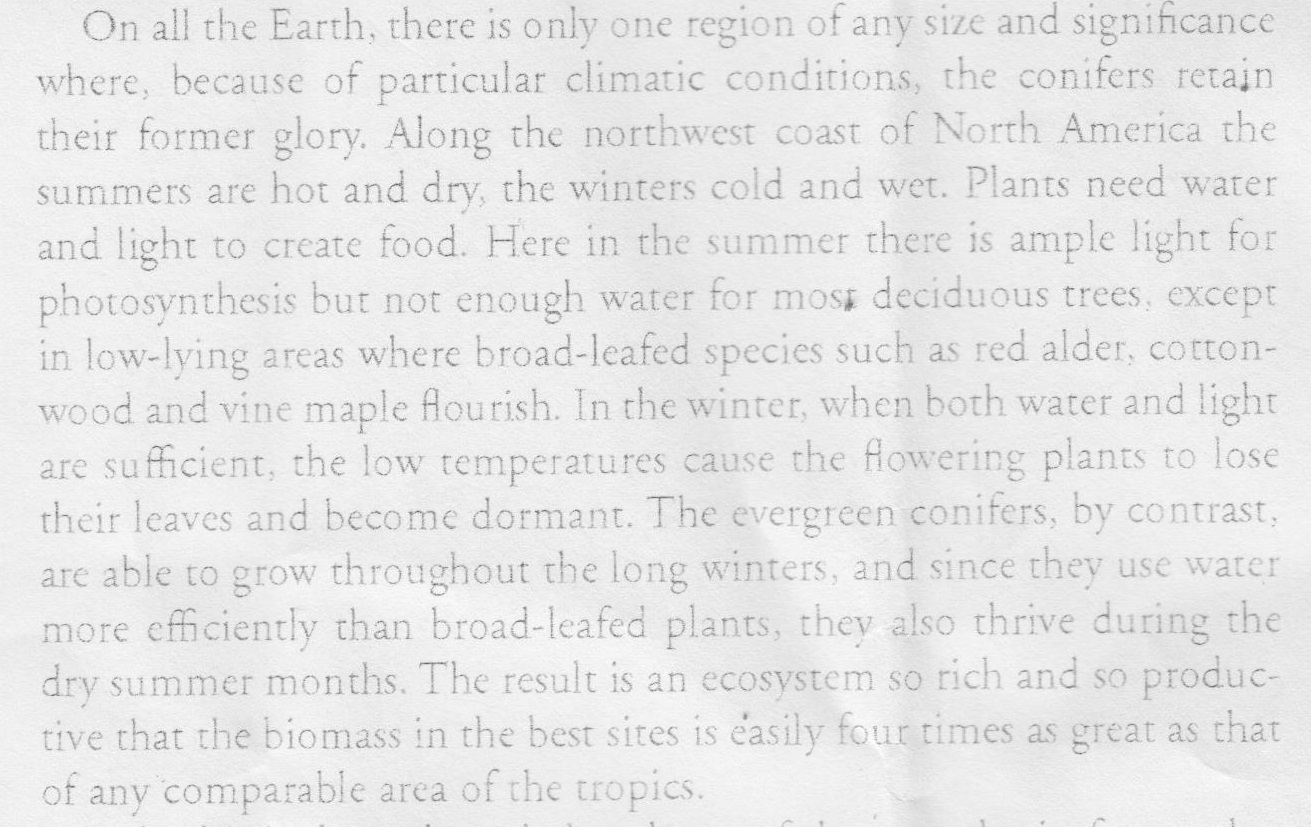
For years I wondered why it was mostly conifers in the west. I finally saw this explanation which if true gives some idea.