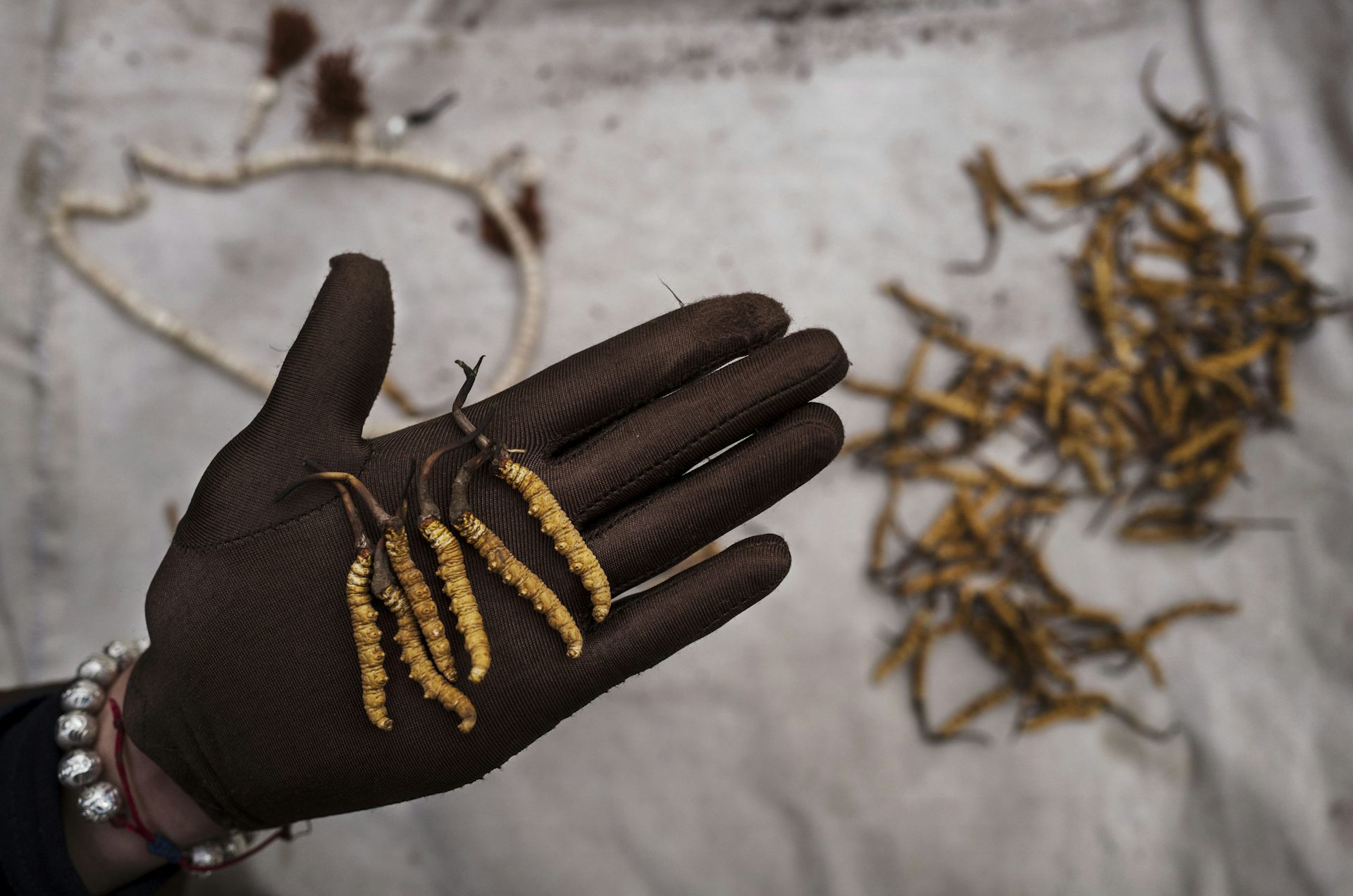

In the remote Qinghai-Tibetan Plateau, a rare fungus grows inside dead caterpillars. In traditional Chinese medicine, this parasitic fungus is prized for its purported medicinal effects. Known as Ophiocordyceps sinensis – colloquially, caterpillar fungus or “Himalayan gold” – it can fetch astronomical prices on the herbal medicine market: up to US$63,000 per pound.
In rural Tibet, yartsa gunbu has become the most important source of cash income. The fungi contributed 40% of the annual cash income to local households and 8.5% to the GDP in 2004. [citation needed] Prices have increased continuously, especially since the late 1990s. In 2008, one kilogram traded for US$3,000 (lowest quality) to over US$18,000 (best quality, largest larvae). The annual production on the Tibetan Plateau was estimated in 2009 at 80–175 tons.[30] The Himalayan Ophiocordyceps production might not exceed a few tons.