Vulnerable rattlers
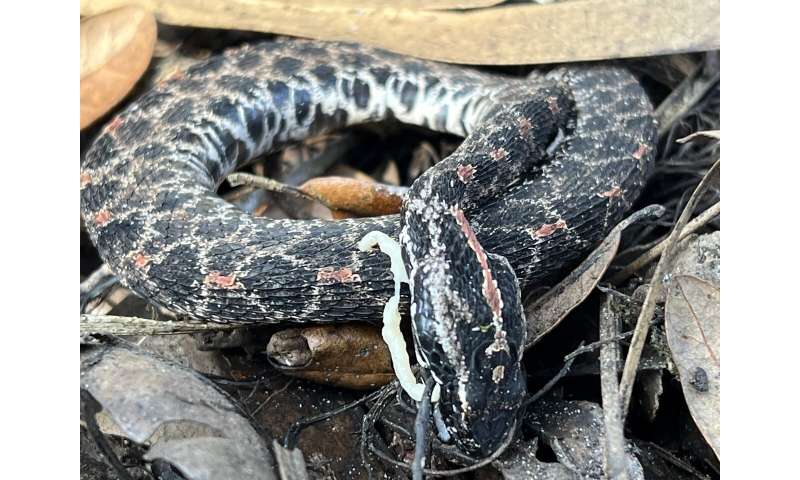
The work also showed that snake species was a predictor of likely pathogens with which they were infected. For example, pygmy rattlesnakes were most likely to be sick with snake fungal disease. Twelve out of 34 rattlers tested positive for Oo, with many having concurrent signs of disease, but just one in 55 eastern ribbon snakes and three out of 36 ring-necked snakes did.
Rattlesnakes were also most likely to host Ro, an invasive, obligate crustacean parasite commonly known as snake lungworm. Fourteen out of 34 rattlesnakes were infected. In other snake species, the same parasite was found less often or not at all, as was the case among Florida green watersnakes.
“We hypothesize that certain species with poorer general population health, specifically rattlesnakes with historic and current increased risks of human persecution, are likely more susceptible to infection with subsequent disease,” said Mishin. “In addition, pygmy rattlesnakes were expected to have an increased prevalence of Ro, as they primarily consume lizards and frogs which are known to transmit the parasite.”
Rattlesnakes among most vulnerable to fungal disease and parasitic lung infection
It is tough enough being a snake then there is our phobias they suffer.