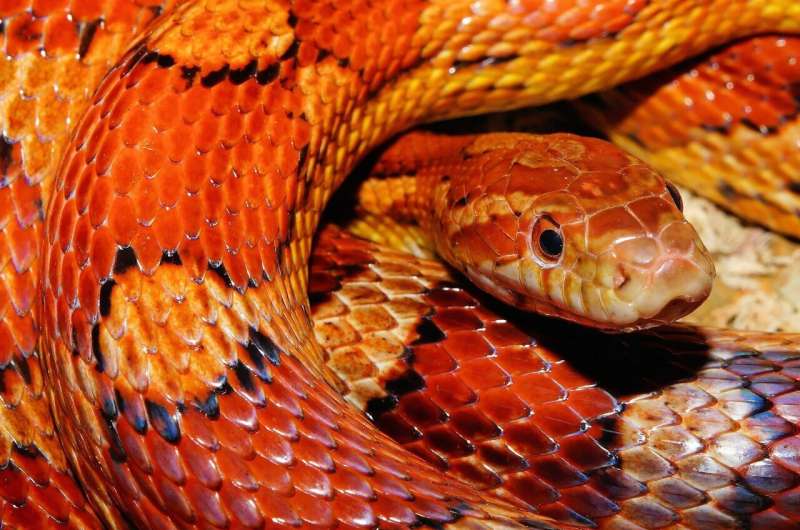
what triggered the evolutionary explosion of snake diversity—a phenomenon known as adaptive radiation—that led to nearly 4,000 living species and made snakes one of evolution’s biggest success stories?
A large new genetic and dietary study of snakes, from an international team led by University of Michigan biologists, suggests that speed is the answer. Snakes evolved up to three times faster than lizards, with massive shifts in traits associated with feeding, locomotion and sensory processing,
Snakes do it faster, better: How a group of scaly, legless lizards hit the evolutionary jackpot
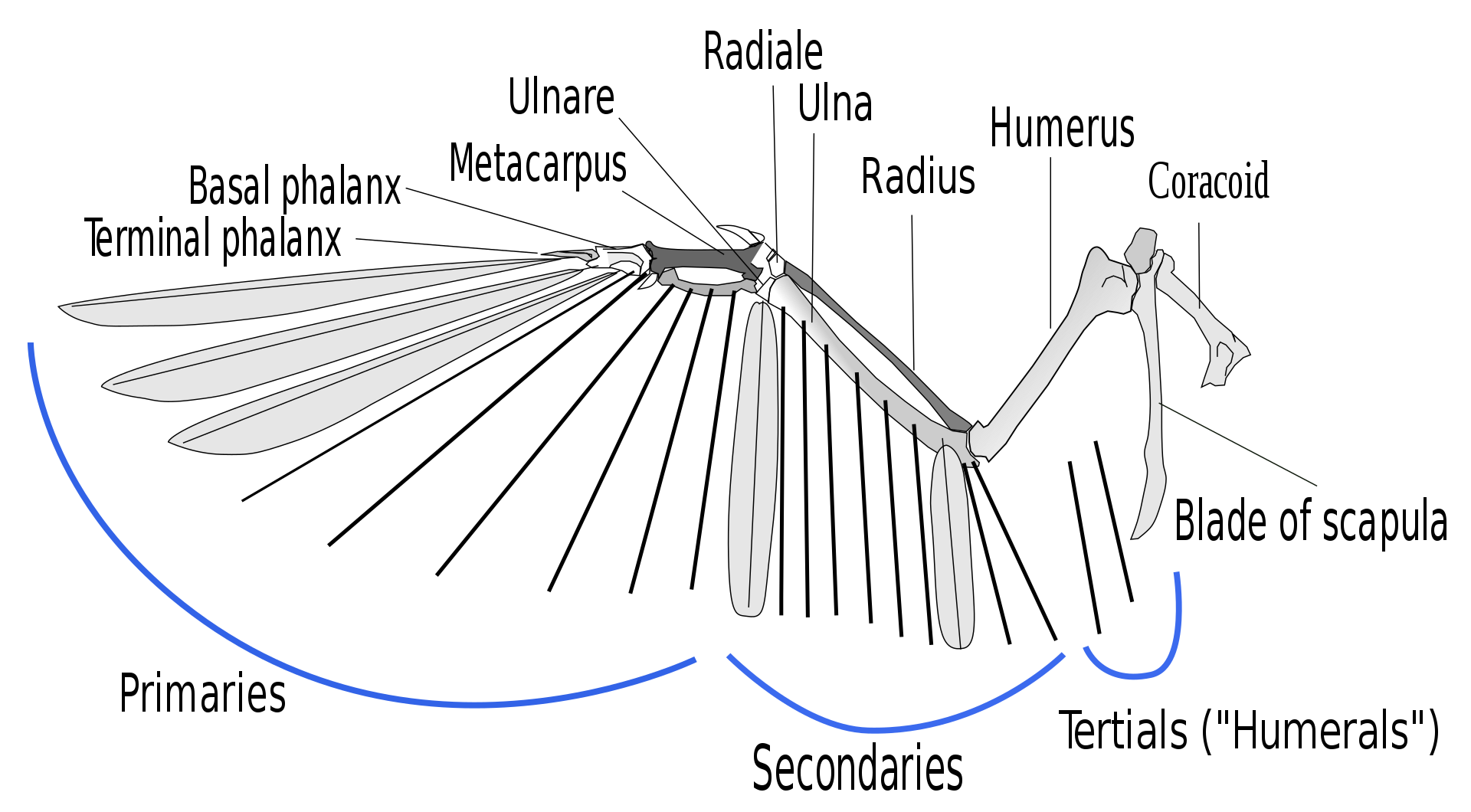

Their new data could settle some old paleontological debates over whether flight evolved in dinosaurs on more than one occasion.
Examining wing feathers of 346 different species of birds from museums around the world, Field Museum of Natural History ornithologist Yosef Kiat discovered an interesting trend. From the tiniest hummingbird to the fiercest eagle, all flying birds had 9 to 11 asymmetrical flight feathers called primaries.But the number of primary feathers in flightless birds varied immensely. Emus lack them completely, while penguins fancy themselves up with 40.
The hidden rule for flight feathers and how it could reveal which dinosaurs could fly
Given Steve’s interest in both, this should pique his interest.