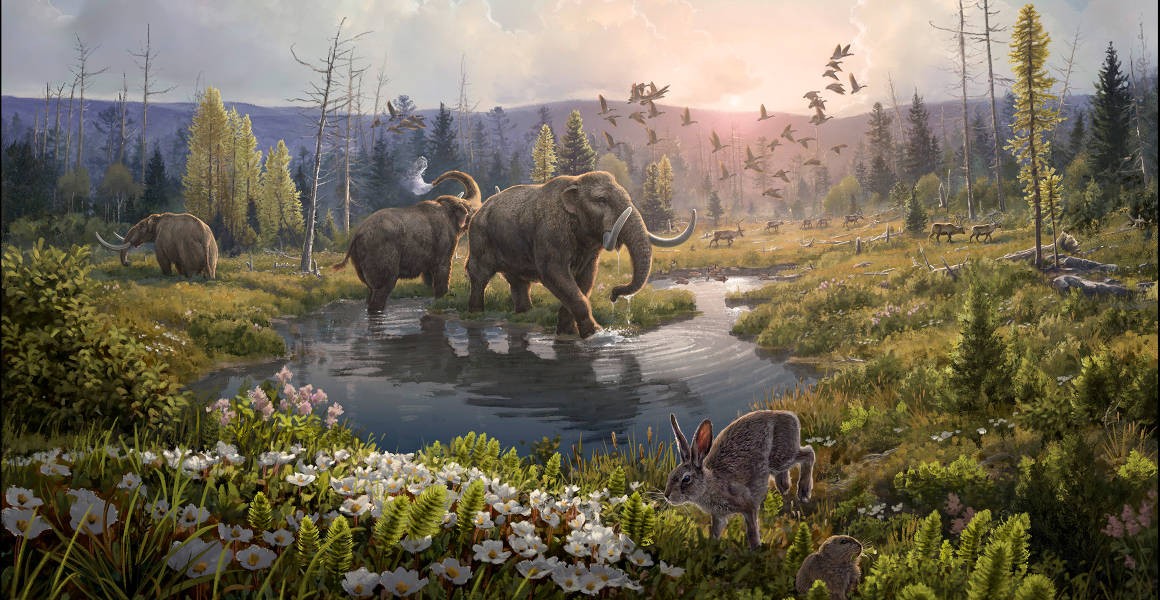
Scientists are getting a glimpse into a two-million-year-old ecosystem in northern Greenland with the help of ancient DNA they extracted from deep sediment that had built up over 20,000 years, been preserved in ice and remained untouched by humans.
The discovery of two-million-year-old microscopic fragments of environmental DNA, or eDNA, in sediment from the Ice Age breaks a long-standing record and ushers in a new chapter in the history of evolution.
Using cutting-edge technology, researchers from Dalhousie.
Nice to see my old school get some cred.
The implications
We detected about five times as many plant genera as achieved in previous studies of ancient sediments1. Although we are still struggling to achieve species-level resolution for many plants and animals, we expect to do so as genome-reference databases improve.
Our study reveals the potential for research into environmental DNA from the deep past. Such work, in turn, could improve our understanding of ecosystems at the Plio-Pleistocene boundary about 2.6 million years ago.
They got it published in Nature, aka the big leagues.
BTW Beth Zaiken has some really cool paleo illustration. I knew about Beth Zaiken but I am surprised I didn’t post about her here before.
As usual, open in new tabs to embiggen.